.png)


Airlift Pump Technology
Airlift pumps have been used for over 150 years to move liquids using compressed air instead of mechanical impellers. Originally developed for mining and water wells, they remain a reliable solution for handling abrasive, corrosive, and solids-laden fluids where conventional pumps often struggle.
Airlift pumps inject compressed air into the base of a submerged pipe. As air mixes with the liquid, the density inside the pipe decreases, creating buoyancy that lifts the air-liquid mixture to the surface.
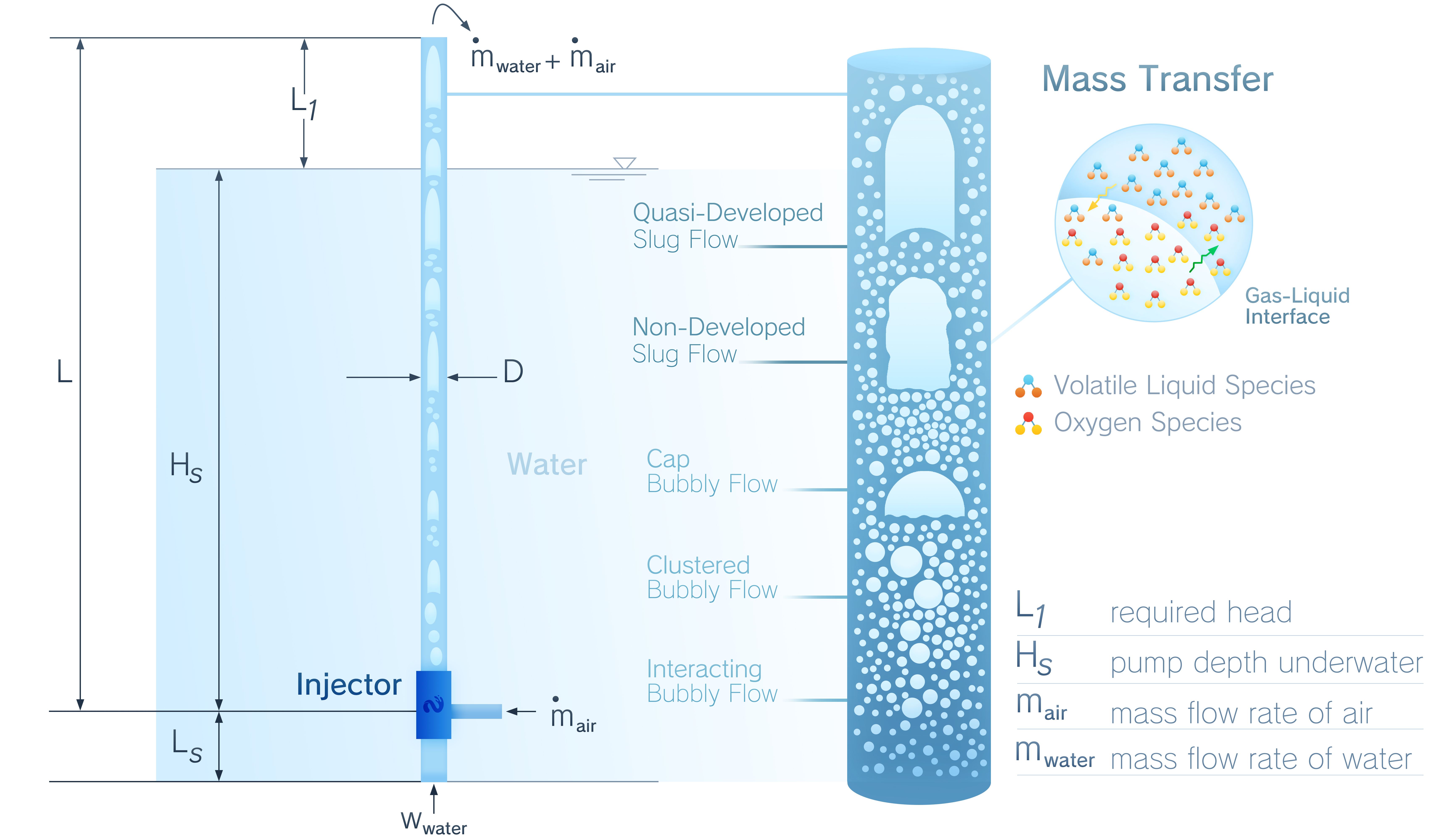
The Submergence Ratio is the depth of the air injection point relative to the total lift height directly influences airlift pump performance. Higher ratios generally produce greater flow rates and improved efficiency.
Limitations of Conventional Airlift Pumps
Although the principle is simple and reliable, conventional airlift pumps are limited by low efficiency, high air demand, and poor control over flow and oxygen transfer. These challenges make them less suited to today's energy-conscious industrial processes.
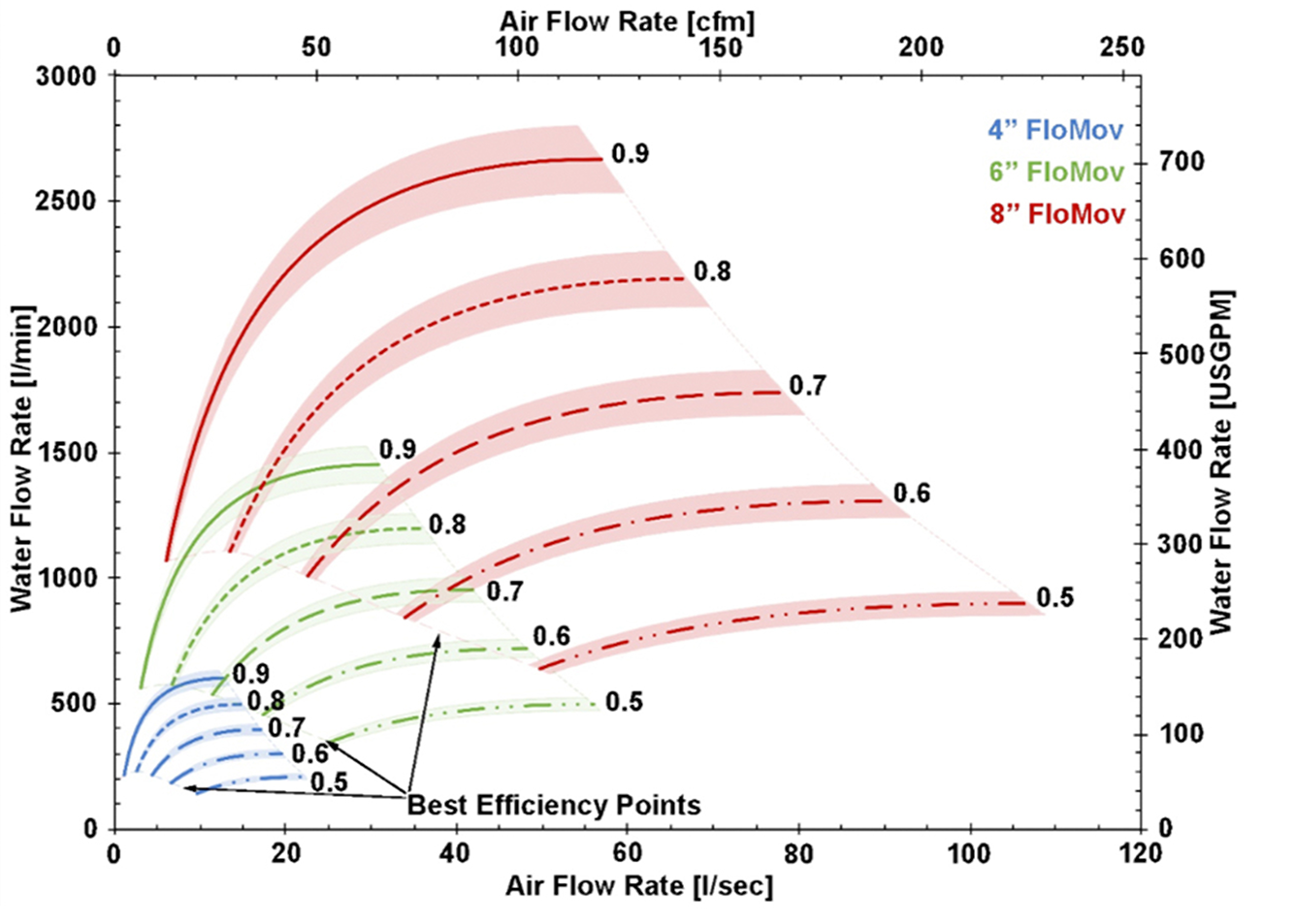
Our pumps have been engineered with optimal air-to-liquid ratios for maximum efficiency. By using the optimal submergence ratio, our pump maximizes efficiency, ensuring the best performance with minimal energy use.
Inside FloMov™
FloMov™ builds on the proven airlift principle with advanced multiphase flow engineering. The result is a next-generation pumping platform that delivers higher efficiency, improved oxygen transfer, and reliable no-moving-parts operation for modern industrial applications.
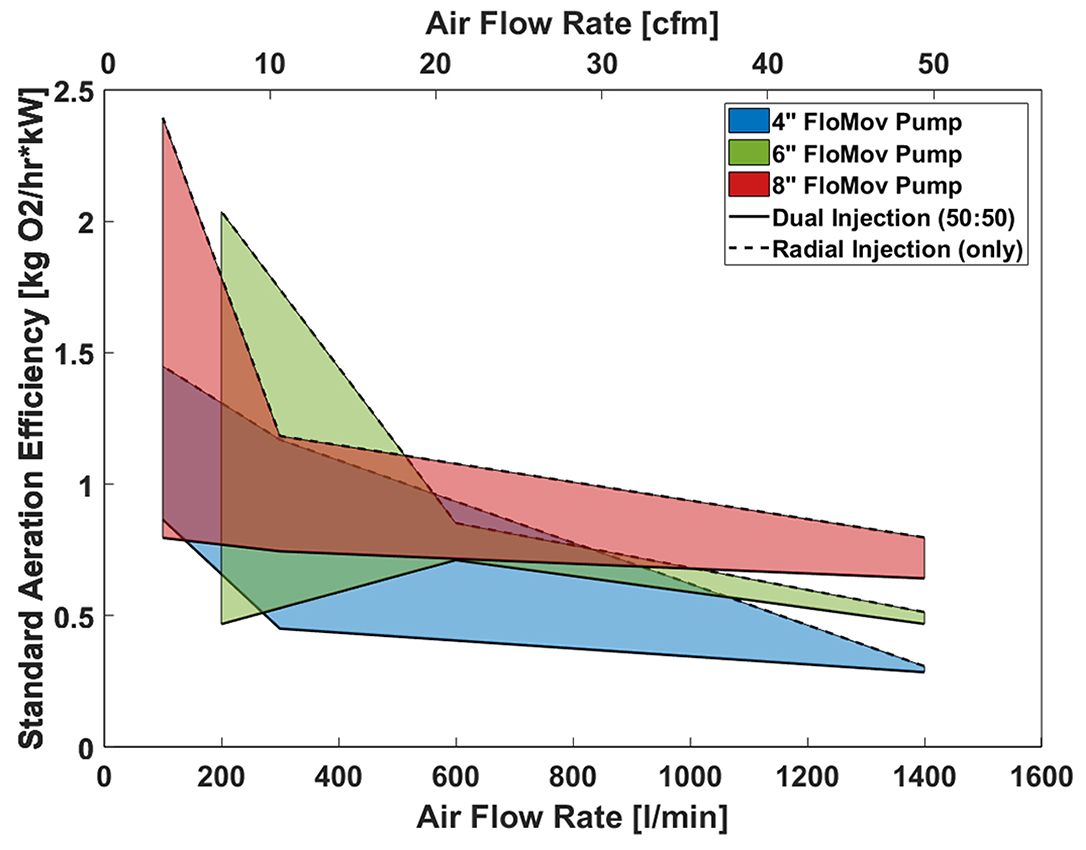
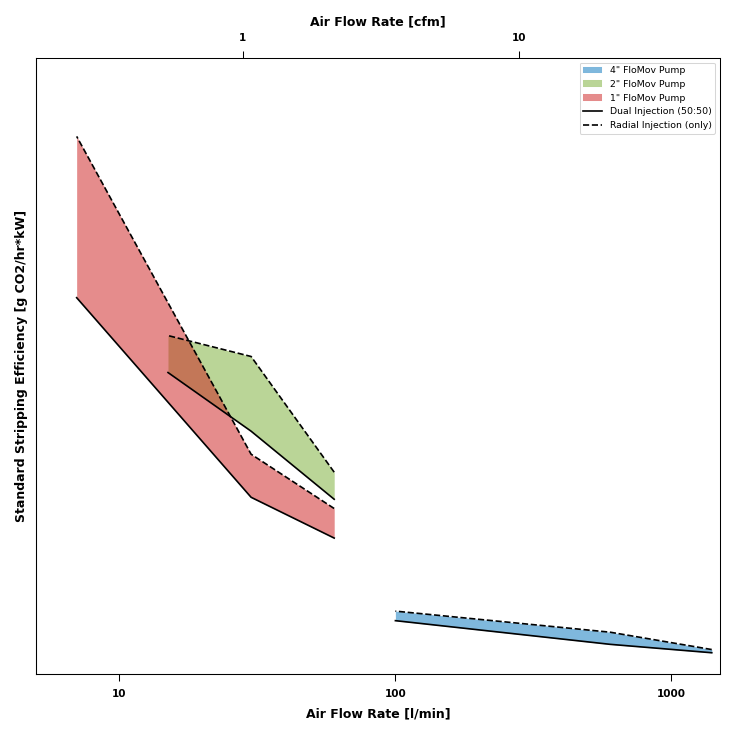
The FloMov™ features two adjustable injection points, allowing you to fine-tune the air-to-liquid ratio for your operation.
Axial Air injection
Enhances water lifting through a pipe inside the pump which directs injected air upward, creating a lifting force along the pipe wall.
Radial Air Injection
Improves aeration through a perforated tube with small holes which produce tiny air bubbles, increasing the surface area for oxygen transfer.









.png)